Pakistan Announces New Plan to Improve Primary School Textbooks
Pakistan Announces New Plan
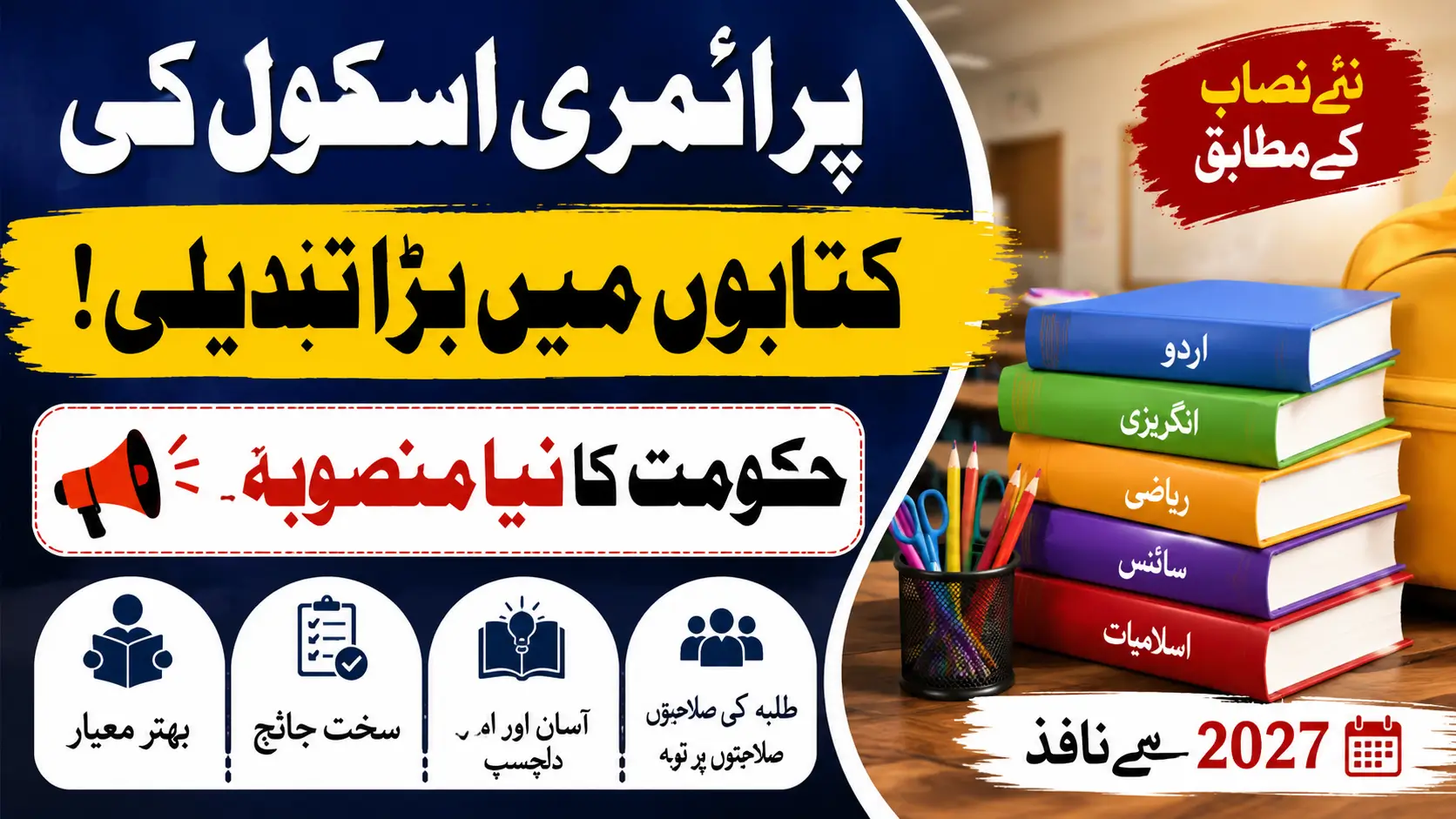
Pakistan Announces New Plan federal government has started work on a new plan to improve the quality of primary school textbooks in Pakistan. The initiative focuses on making textbooks more useful, engaging, and easier for children to understand while also improving the way books are developed, reviewed, selected, and printed.
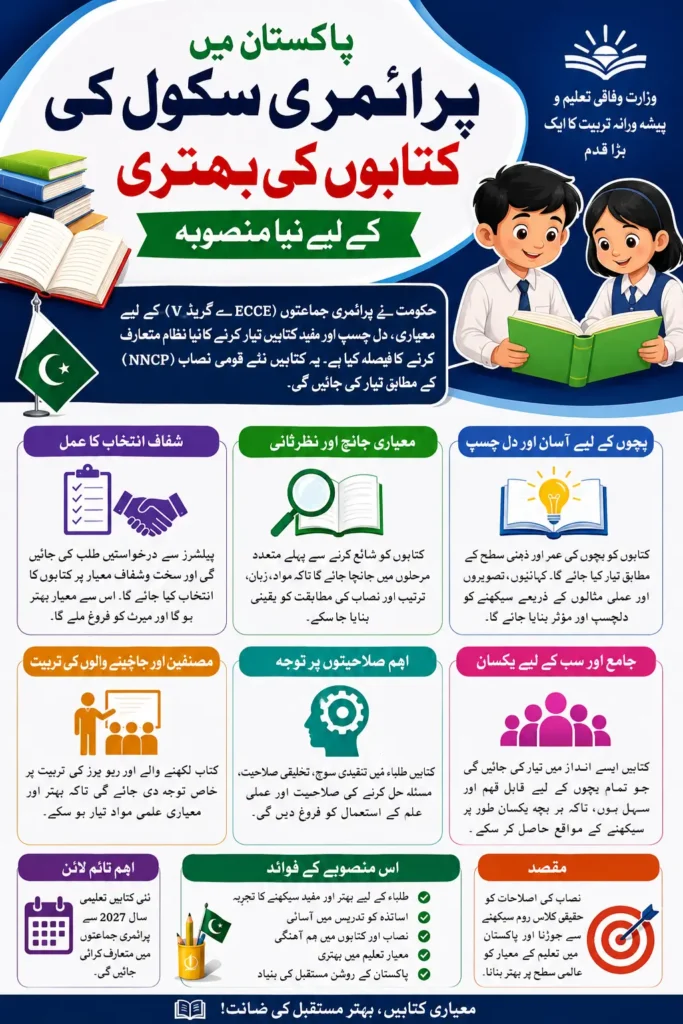
The Ministry of Federal Education and Professional Training (MoFEPT) has reviewed and recommended a new mechanism for textbook development through the National Book Foundation. The proposed system is expected to bring greater transparency to the selection process and improve the overall quality of learning materials.
You Can Also Read: Punjab Colleges Face Class 11 and 12 Textbook Shortage
New Textbook Reform Plan
The new initiative is aimed at strengthening the complete textbook process rather than making changes to books alone. It covers areas such as textbook preparation, quality checks, publisher selection, review, printing, and the training of people involved in developing educational content.
The government wants primary school textbooks to better support children in the classroom. Instead of focusing only on memorizing information, the proposed approach will give greater importance to understanding concepts and using knowledge in practical situations.
The main areas of the proposed reform include:
- Better textbook development and planning
- Stronger quality assurance
- Transparent selection of publishers
- Improved review procedures
- Training for authors and reviewers
- Child-friendly educational content
- Greater focus on practical learning
Roadmap Covers ECCE to Grade V
The new roadmap covers Early Childhood Care and Education (ECCE) through Grade V. These are important early years because children develop their basic reading, writing, thinking, and learning skills during this stage.
The Lead Committee on Textbook Development has been working on a roadmap for preparing high-quality and learner-centered textbooks. The committee is chaired by Education Secretary Nadeem Mahbub and is responsible for discussing the direction of the proposed textbook development system.
For young students, the government plans to make learning material more suitable for their age and level of understanding. This means textbooks are expected to use clearer explanations and content that children can connect with their daily lives.
You Can Also Read: Punjab Opens Class 11 Board Registration
| Area | Proposed Focus |
|---|---|
| Classes | ECCE to Grade V |
| Curriculum | New National Curriculum of Pakistan |
| Expected rollout | Academic Session 2027 |
| Main focus | Quality and learner-centered textbooks |
| Selection process | Transparent publisher selection |
Textbooks to Follow the New National Curriculum
One of the important parts of the plan is that the new textbooks will be aligned with the New National Curriculum of Pakistan (NNCP). This means the books will be prepared according to the learning objectives and requirements set under the updated curriculum.
Curriculum and textbooks need to work together. If the curriculum is changed but textbooks do not properly reflect those changes, teachers and students can face difficulties in the classroom. The proposed system aims to reduce this gap by developing books that support the new curriculum more effectively.
The revised textbooks are expected to be introduced for primary classes from the Academic Session 2027. This gives the authorities time to develop, review, and prepare the material before it reaches students.
Publishers to Face a More Transparent Selection Process
The proposed mechanism also includes inviting Expressions of Interest (EOIs) from publishers. This would allow publishers to participate in the process under defined requirements instead of relying on an unclear or inconsistent selection system.
According to the information provided by officials, transparent and rigorous criteria will be used to assess textbooks. The purpose is to ensure that educational material meets the required standards before it is selected for students.
A stronger publisher selection system could help authorities focus on:
- Quality of educational content
- Curriculum alignment
- Age-appropriate language
- Accuracy of information
- Presentation and design
- Learning value for students
You Can Also Read: Punjab Schools Reopening Check
Stronger Quality Checks for Textbooks
Quality assurance is another major part of the proposed reform. Textbooks are used by thousands of students, so mistakes, outdated information, or poorly explained concepts can directly affect learning.
The ministry plans to strengthen the review process so that books receive proper examination before they are approved. This can help identify problems in content, language, structure, and curriculum coverage at an earlier stage.
The initiative also includes training and capacity building for textbook authors and reviewers. Better-trained teams can play an important role in producing books that are accurate, understandable, and suitable for primary-level students.
Making Textbooks More Child-Friendly
The government wants primary textbooks to become more child-friendly, engaging, and age-appropriate. For young students, simply providing large amounts of information is not enough. The material also needs to be presented in a way that keeps children interested in learning.
The proposed textbooks will focus on helping students understand concepts instead of depending heavily on memorization. Lessons are expected to support competencies and encourage children to connect classroom knowledge with practical situations.
This approach could make textbooks more useful for both students and teachers, particularly when difficult ideas are explained through simple and relatable content.
You Can Also Read: FPSC Announces Revised CSS 2027
Greater Focus on Critical Thinking and Creativity
The new textbook approach will also give importance to skills such as critical thinking, creativity, and problem-solving. These skills are becoming increasingly important as education moves beyond traditional memorization-based learning.
Students will need opportunities to think about questions, understand different situations, and apply what they have learned. Well-designed textbooks can support this by including content and activities that encourage students to think rather than simply remember answers.
The proposed focus includes:
- Critical thinking
- Creativity
- Problem-solving
- Conceptual understanding
- Practical application of knowledge
- Development of key competencies
Supporting Inclusive Learning
Another objective is to promote inclusive learning through better-designed educational materials. Textbooks should be understandable and useful for children with different learning needs and abilities.
By focusing on simple language, suitable presentation, and learner-centered content, the new approach aims to make classroom material more accessible. This is particularly important at the primary level, where children have different learning speeds and backgrounds.
The overall goal is to make textbooks a stronger learning tool rather than treating them simply as printed versions of the curriculum.
What the New Plan Means for Students and Teachers
For students, the proposed changes could mean textbooks that are easier to understand and more connected to practical learning. Instead of concentrating mainly on remembering facts, children could receive more opportunities to develop understanding and useful skills.
Teachers could also benefit from improved textbooks because better-organized learning material can make classroom teaching easier. When textbooks clearly support curriculum objectives, teachers have a stronger resource to guide lessons and activities.
| Stakeholder | Expected Benefit |
|---|---|
| Students | Easier, engaging, and practical learning material |
| Teachers | Better support for classroom teaching |
| Authors | Training and capacity building |
| Reviewers | Stronger review standards and professional development |
| Publishers | Clearer and more transparent selection criteria |
| Education system | Better connection between curriculum and classroom learning |
Why Textbook Quality Matters for Pakistan
Textbooks play a central role in Pakistan’s education system. In many schools, especially at the primary level, the textbook remains one of the main resources used by teachers and students during daily lessons.
For this reason, improving the quality of textbooks can have a wider impact than simply changing the appearance or printing quality of books. Accurate information, clear explanations, practical examples, and age-appropriate content can help students build stronger foundations in their early years.
The federal ministry’s proposed mechanism is therefore focused on connecting curriculum reform with actual classroom learning. Officials have emphasized that good curricula and quality textbooks are important for improving the overall standard of education.
You Can Also Read: HEC Announces HAT Date for Overseas
New Textbooks Expected From Academic Session 2027
The most important timeline for parents, teachers, and students is Academic Session 2027, when the new textbooks are expected to be introduced for primary classes.
Before that happens, the proposed system will need to go through the stages of publisher participation, textbook development, review, quality assurance, and printing. These steps are important to ensure that the final books meet the required standards.
For now, the initiative represents a planned shift toward more learner-focused textbooks. If implemented effectively, it could help bring curriculum reforms into everyday classroom learning across primary education.
Final Words
Pakistan’s new textbook plan is focused on improving more than just the books students carry to school. The proposed mechanism aims to improve the entire process, from selecting publishers and developing content to reviewing, approving, and printing textbooks.
With a focus on the New National Curriculum of Pakistan, child-friendly learning, conceptual understanding, critical thinking, creativity, and practical knowledge, the initiative could provide a stronger foundation for primary education.
The expected introduction of the revised textbooks from the 2027 academic session will be an important stage in this process. The real success of the plan, however, will depend on how effectively the proposed standards are applied and how well the final textbooks meet the needs of Pakistani students and teachers.
You Can Also Read: KP Orders All Education Boards
Frequently Asked Questions
When are the new primary textbooks expected to be introduced?
The new textbooks are expected to be introduced for primary classes from the Academic Session 2027.
Which classes are covered under the proposed plan?
The roadmap covers Early Childhood Care and Education (ECCE) through Grade V.
Which curriculum will the new textbooks follow?
The textbooks will be aligned with the New National Curriculum of Pakistan (NNCP).
How will publishers be selected?
The proposed mechanism includes inviting Expressions of Interest from publishers and applying transparent and rigorous selection criteria.
What skills will the new textbooks promote?
The proposed books will focus on conceptual understanding, critical thinking, creativity, problem-solving, competencies, practical application of knowledge, and inclusive learning.